
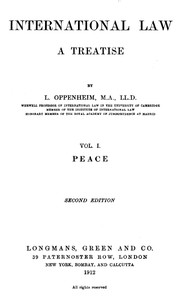
International Law. A Treatise. Volume 1 (of 2) by L. Oppenheim
Okay, let's be clear: this isn't a beach read with a twist ending. But the 'story' it tells is epic. International Law, Volume 1 is Oppenheim's attempt to map the entire system of rules between states at the dawn of the 20th century. Think of it as a massive field guide to diplomacy, war, territory, and the rights of nations. The 'plot' is his argument that these aren't just polite customs, but actual law that countries recognize. He walks you through the sources of this law, who the key players are (states, not people), and how they acquire land, make treaties, and interact on the global stage. It's the foundational text that helped shape how we think about global order.
Why You Should Read It
You read this for the 'aha!' moments. It's humbling to see how many of today's headlines—disputes over sea borders, the rules of war, diplomatic immunity—were being puzzled over a century ago. Oppenheim writes with a clear, confident voice, convinced that a system of law between nations is not just possible but essential. Reading him is like sitting with the architect of a vast, invisible city; he explains why each pillar was placed where it is. It gives you a deep, historical lens to understand why the world works the way it does.
Final Verdict
This is for the curious non-expert who loves history, politics, or big ideas. It's perfect for a student, a policy wonk, or anyone who watches the news and wonders, 'But what's the actual rule here?' It's a commitment, but skimming key sections is incredibly rewarding. You won't get car chases, but you will get the intellectual thrill of seeing the framework of our modern world being built, one careful argument at a time.
No rights are reserved for this publication. You are welcome to share this with anyone.
Michelle Ramirez
1 year agoGreat read!
Oliver Moore
1 year agoBeautifully written.
Amanda Walker
1 year agoSurprisingly enough, the atmosphere created is totally immersive. Worth every second.
Christopher Davis
1 year agoVery interesting perspective.




Kenneth Ramirez
1 year agoCitation worthy content.