
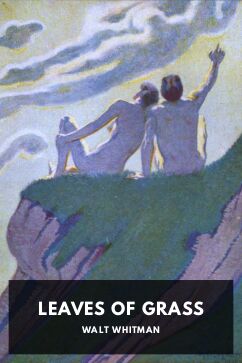
Leaves of Grass - Walt Whitman
Forget everything you think you know about poetry. Walt Whitman's Leaves of Grass throws out the rulebook. First published in 1855, it wasn't just a new book of poems—it was a declaration of independence for American writing. Whitman spent his entire life revising and expanding it, creating a living work that grew as he did.
The Story
There isn't a plot in the traditional sense. Instead, the 'story' is the journey of a consciousness—Whitman's own poetic 'I'—wandering through America. He becomes everyone and everything: a woman watching from a window, a runaway slave, a dying soldier, a bustling city street. He sings the body electric, finds divinity in sweat and soil, and mourns the death of President Lincoln with a grief that feels fresh today. The book moves from the intimate details of the human body to the vast sweep of the continent, arguing that they are all connected, all equally worthy of song.
Why You Should Read It
I'll be honest: the first time I tried, I put it down. It felt like too much. But I came back, and I'm so glad I did. Reading Whitman is less about analysis and more about immersion. You don't dissect his long, rolling lines; you ride them like a wave. His central idea—that every single person, leaf, and atom is part of a glorious, democratic whole—is a radical act of optimism. In a world that often feels fractured, his voice is a powerful reminder of our shared humanity. He finds beauty in places poetry rarely went: the 'aroma' of armpits, the 'whirr' of machinery, the quiet dignity of a working man.
Final Verdict
This book is for anyone feeling disconnected, for anyone who needs a jolt of raw, joyful energy. It's perfect for readers who think they don't like poetry, for history lovers wanting to feel the pulse of 19th-century America, and for anyone who just needs a friend telling them they are enough, exactly as they are. It's not a quiet, polite read. It's a booming voice from the page, an invitation to walk beside him and see the world, and yourself, anew. Keep an open mind, dive in anywhere, and let it wash over you.
This is a copyright-free edition. You do not need permission to reproduce this work.
Deborah Scott
10 months agoA bit long but worth it.
Logan Hernandez
1 year agoGreat reference material for my coursework.
John Miller
1 year agoI stumbled upon this title and the plot twists are genuinely surprising. Exactly what I needed.
Joshua Gonzalez
1 year agoThis book was worth my time since the arguments are well-supported by credible references. I would gladly recommend this title.




Amanda Johnson
3 months agoGood quality content.