
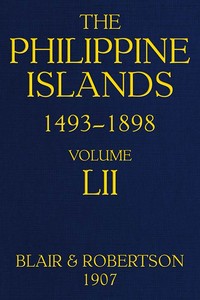
The Philippine Islands, 1493-1898, Volume 52, 1841-1898 by Emma Helen Blair et al.
This book isn't a traditional novel with a plot. Instead, it's a curated collection of primary source documents from a critical 57-year period in Philippine history. Edited by Emma Helen Blair and others, it pulls together letters, official decrees, religious reports, and eyewitness accounts. The "story" it tells is the slow-building tension of a colony straining under Spanish rule.
The Story
The volume opens in 1841, a time of established colonial control, and follows the paper trail through to 1898, the year of the Philippine Revolution and the Spanish-American War. You don't get a single narrator. Instead, you read the actual words of Spanish governors trying to maintain order, Filipino priests documenting daily life, and reformers like José Rizal's contemporaries beginning to voice calls for change. The narrative is built from these conflicting perspectives, showing how ideas of reform and revolution took shape.
Why You Should Read It
Reading this feels like being a historical detective. There's no author telling you what to think. You get to piece together the reality from missionary complaints about "indolence," economic reports, and the first murmurs of nationalist thought. It’s challenging but rewarding. You see the arguments, the biases, and the everyday concerns that textbooks often smooth over. It makes the past feel immediate and human, not just a list of events.
Final Verdict
This is not a casual beach read. It's perfect for history buffs, students, or anyone with Filipino heritage who wants to go deeper than a Wikipedia page. If you enjoy getting your history straight from the source and don't mind reading some dry official correspondence to find the real gems, this collection is a treasure. It's for the curious reader who likes to form their own conclusions.
This historical work is free of copyright protections. You can copy, modify, and distribute it freely.
Christopher Torres
11 months agoThe layout is very easy on the eyes.
Paul Hernandez
7 months agoBeautifully written.
Kenneth Sanchez
1 year agoFinally found time to read this!
Kimberly Lewis
2 years agoComprehensive and well-researched.






Michelle Rodriguez
1 year agoNot bad at all.