
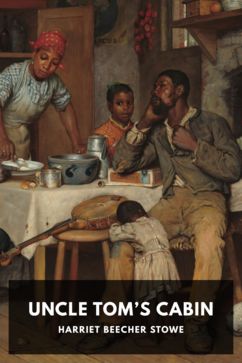
Uncle Tom’s Cabin - Harriet Beecher Stowe
Let’s talk about one of the most important novels in American history. ‘Uncle Tom’s Cabin’ isn't a single, simple story. It’s a collection of lives torn apart by slavery, all connected by the brutal buying and selling of human beings.
The Story
The plot kicks off when a Kentucky farmer, in debt, decides to sell two of his enslaved people: Uncle Tom, a wise and pious middle-aged man, and Harry, the young son of Eliza, a maid. Eliza overhears the plan and makes a desperate, frozen run across the Ohio River to save her boy. Her journey is frantic and terrifying. Tom, committed to his master's word, accepts his fate. He’s sold down the river, passing through different owners—some kind, some indifferent, and finally, the monstrous Simon Legree. The book cuts between Tom’s story of endurance and faith, and Eliza’s race for freedom, showing the different ways people survived and resisted an inhuman system.
Why You Should Read It
This book is a powerhouse of emotion. Stowe wrote it to make the North understand slavery not as a political issue, but as a human catastrophe. She succeeds. You’ll meet characters like the fiery Eliza, whose motherly love defies rivers and slave catchers, and Eva, the angelic child who sees no difference between people. But Tom is the heart of it. His struggle isn’t for physical freedom, but to keep his kindness and faith alive in a world trying to crush it. Reading it, you get why this book was a cultural earthquake. It made abstract arguments about property and states' rights painfully personal. It shows how the system corrupted everyone it touched, from the vicious Legree to the ‘good’ masters whose kindness was always conditional.
Final Verdict
This is essential reading for anyone who wants to understand America’s story. It’s perfect for book clubs (there’s so much to discuss), history buffs who want context beyond dates and battles, and readers who appreciate character-driven stories about moral courage. Be ready—the language is of its time and some scenes are emotionally heavy. But don't let its age fool you. The core questions about justice, compassion, and what we owe each other are as urgent now as they were in 1852. Pick it up not because you ‘should,’ but because it’s a truly moving, conversation-starting piece of our shared history.
This text is dedicated to the public domain. Knowledge should be free and accessible.
Richard Gonzalez
10 months agoLooking at the bibliography alone, the author clearly has a deep mastery of the subject matter. Finally, a source that prioritizes accuracy over hype.
Patricia Taylor
3 weeks agoI was skeptical about the depth of this book at first, but the author clearly has a deep mastery of the subject matter. This adds significant depth to my understanding of the field.
James Gonzalez
4 months agoThis is now a staple reference in my professional collection.
Carol Johnson
7 months agoThe layout is very easy on the eyes.



Paul Rodriguez
1 month agoThe research depth is palpable from the very first chapter.